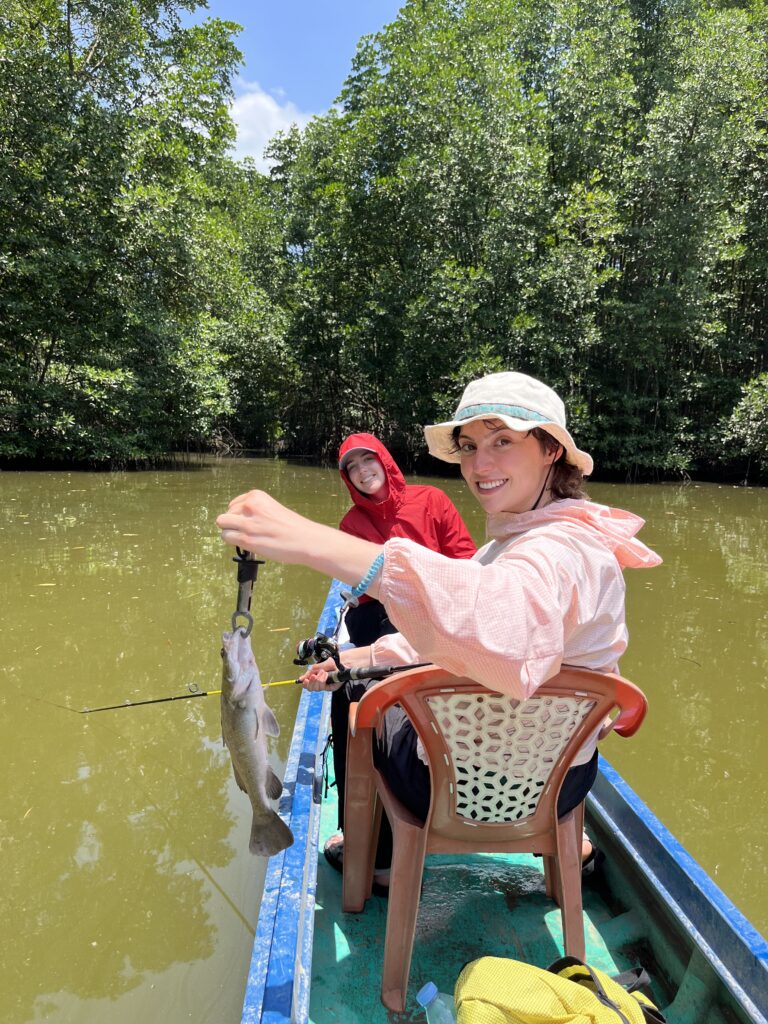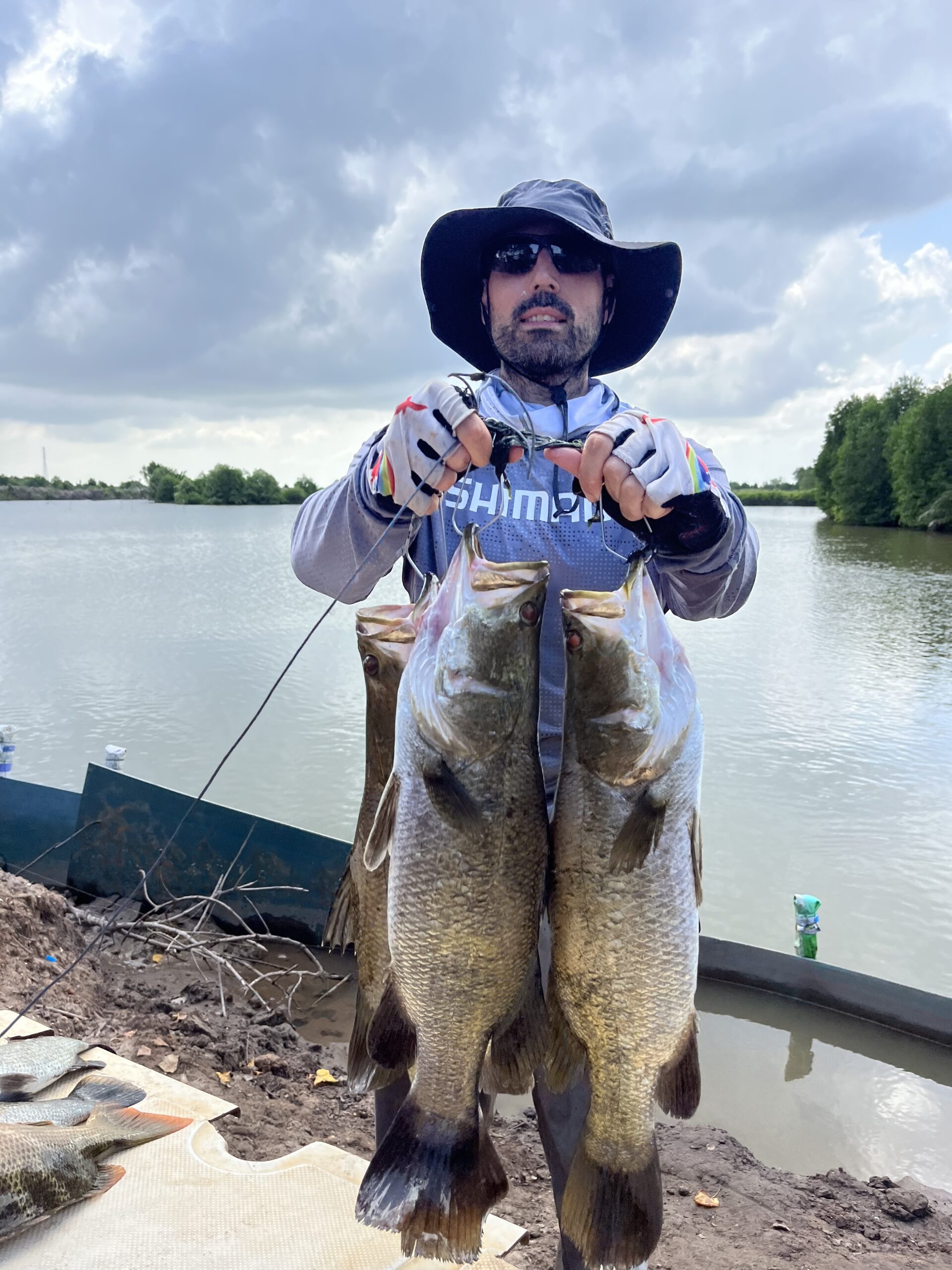
When anglers think about fishing in Ho Chi Minh City, most imagine mangrove creeks or open rivers. But deep in the Wild Mekong, there’s another world — vast shrimp and crab lakes holding some of the biggest barramundi in Southern Vietnam.
These are not small ponds. Many of these systems stretch over 30 hectares or more, forming a maze of open water, narrow channels, mangroves, and dense water coconut palms. It’s raw, quiet, and incredibly alive — the perfect habitat for trophy fish.
What Makes These Lakes So Special?
At first glance, these lakes are part of aquaculture. But in reality, they behave like natural ecosystems.
Connected to tidal rivers, they constantly exchange water, baitfish, and nutrients. Over time, they become rich feeding grounds where predator fish thrive — especially barramundi.
The combination of scale + structure + food is what makes the Wild Mekong so unique.
Why Do Barramundi Grow So Big Here?
This is where things get interesting. These lakes consistently produce meter-plus barramundi, and there are a few key reasons why:
Abundant Food
Shrimp, juvenile fish, and small crabs are everywhere. Big barra don’t need to move far to feed — energy in, energy out, they grow fast.
Massive Habitat
With lakes averaging 30+ hectares, fish have space to roam, hunt, and avoid pressure. This isn’t a small, pressured fishery — it’s a wide, complex system.
Low Angling Pressure
Very few anglers fish these waters. Most activity is focused on farming, meaning fish can grow undisturbed for years.
Perfect Structure
Mangrove edges, water gates, submerged roots, and palm-lined banks create endless ambush zones. This is exactly where big barramundi sit and wait.
Fishing the Wild Mekong: A Technical Game
Fishing here is not about covering water — it’s about precision.
Casting tight to structure is key. Most strikes happen close to:
- Pond edges and drop-offs
- Water gates and inflow points
- Mangrove roots and shaded pockets
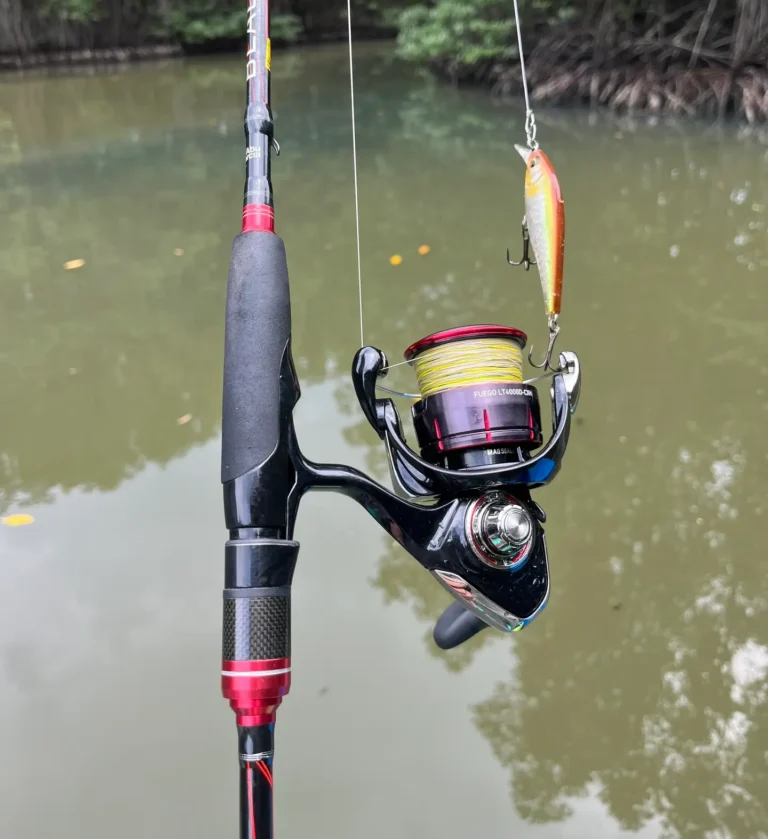
Lure fishing is extremely effective, especially:
- Soft plastics (paddle tails, prawns)
- Small hardbodies
- Topwater during low light
The takes are aggressive, and big fish hit hard in shallow water. It’s one of the most exciting ways to experience barramundi fishing in Vietnam.
Why Summer Is Prime Time
As the rainy season approaches, everything changes.
Rising water levels and increased flow bring more bait into the system. Oxygen levels improve, fish become more active, and barramundi push into shallower areas to feed.
This makes the summer months one of the best times to explore the Wild Mekong — especially for anglers chasing trophy fish.
A Different Kind of Fishing Tour in Vietnam
If you’re looking for something beyond a standard day trip, this is it.
The Wild Mekong offers a more remote and immersive experience compared to our
Mangrove Forest fishing tour — with bigger water, bigger fish, and a true expedition feel.
It also pairs well with other experiences like our
Oyster Farms fishing tour, where structure fishing and precision casting play a key role.
Each environment is different, but together they showcase the diversity of fishing in Ho Chi Minh City and the surrounding region.
Fish the Wild Mekong Yourself
For anglers ready to take it further, our
Wild Mekong Fishing Tour is a 2-day, 1-night expedition into these remote brackish systems.
With private transport from your hotel, premium fishing gear provided, and full guidance throughout the trip, everything is designed for a smooth and focused experience.